25 Strange Borders Spinning on a 3D Globe
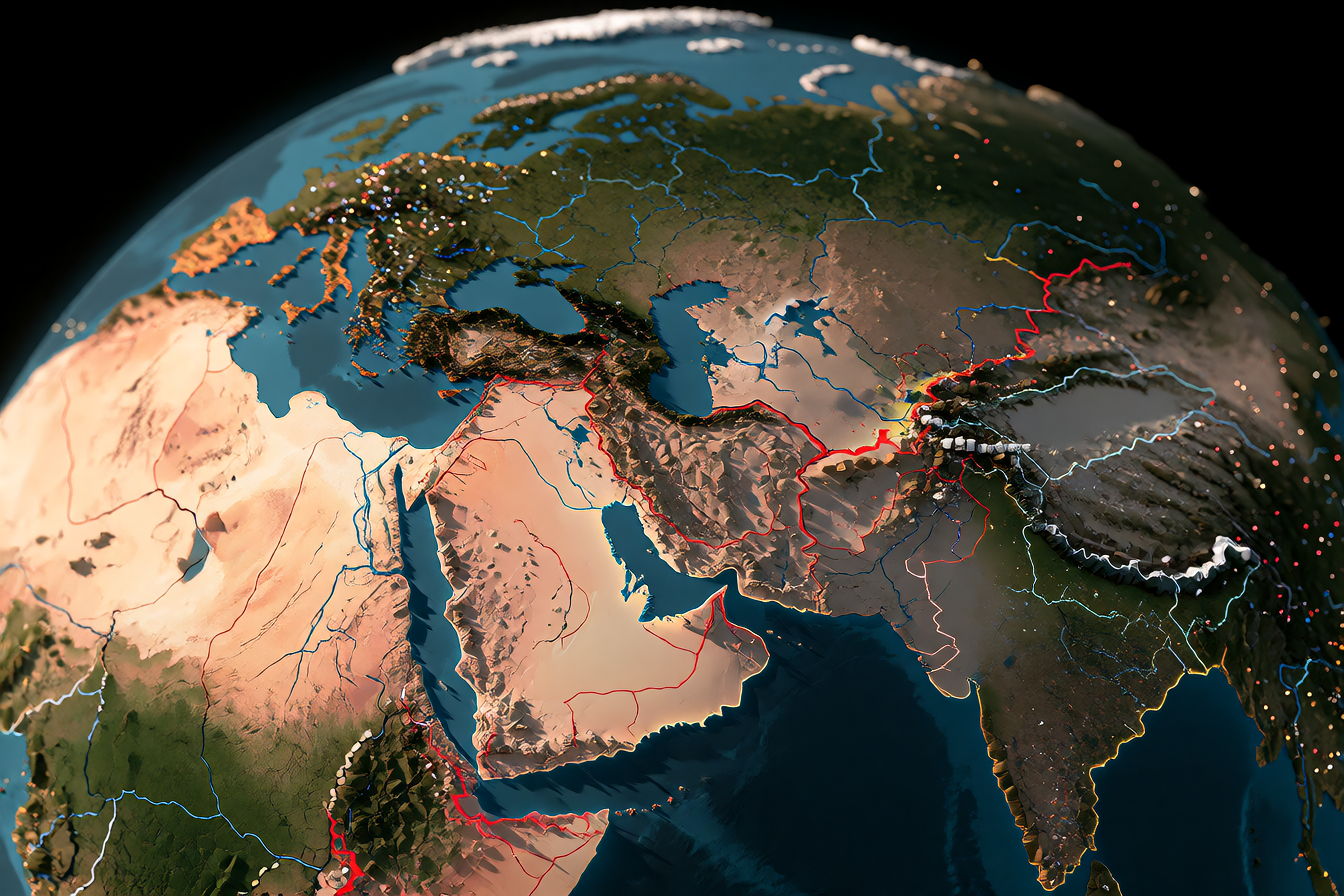
Weirdest Borders & Hidden Places is an interactive 3D globe and editorial portal that lets you fly across the planet's strangest boundaries. It maps 25 geographic oddities: places where enclaves sit inside exclaves, where countries have islands disconnected from themselves, where borders run through buildings and down shopping streets. The site works as a visual discovery tool—you spin the globe, click places, and each one opens into articles, embedded videos, and stories about how that particular chunk of Earth became geographically absurd.
What's there
The core is a 3D globe you can rotate and zoom into, with 25 locations pinned on it. Each location links to an article explaining the history and oddity. Featured places include Baarle-Nassau (22 Belgian enclaves nested inside the Netherlands, with the border running through shops and houses), Point Roberts (a dangling U.S. peninsula reachable by car only by driving through Canada), Kaliningrad (a Russian exclave surrounded by Lithuania and Poland), Ceuta (Spanish territory sitting on the African coast), and Tristan da Cunha (the remotest inhabited island group). The site also includes videos exploring each location, a border quiz, and an "explorer passport" to track your discoveries.
Where to start
- Spin to Baarle-Nassau: Watch the border zoom in to show actual white tiles on pavements marking which side is Belgium and which is the Netherlands. See how the town's messiest border reveals what happens when medieval feudal land sales never get rationalized into modern nation-states.
- Find Point Roberts: This one frustrates drivers: a small American community that you can reach from mainland Washington only by driving through Canada twice. It sits south of the 49th parallel, a line drawn in 1846 that turned geography into absurdity.
- Discover the layers under Kaliningrad: An entire Russian city separated from Russia itself by Lithuania and Belarus. Articles trace how it was annexed in 1945 and why it matters geopolitically today.
Make something from it
The overlapping, nested, broken borders here offer visual language for artists exploring territory, ownership, and the artificial lines we've drawn across landscapes. The idea that a place can belong to two countries simultaneously, that borders can run through a living room, invites surreal renderings and impossible architecture. Consider drawing borders not as lines but as volumes, or mapping spaces where nationality shifts with each step. The color-blocking and labeling system on the globe itself—different shades for each country—becomes abstract and tangled at these sites, suggesting materials for work about control, identity, and the gaps between political claims and physical space.