Claude Paints an Autumn Tree With a Robotic Arm—and Mixes Its Own Colors
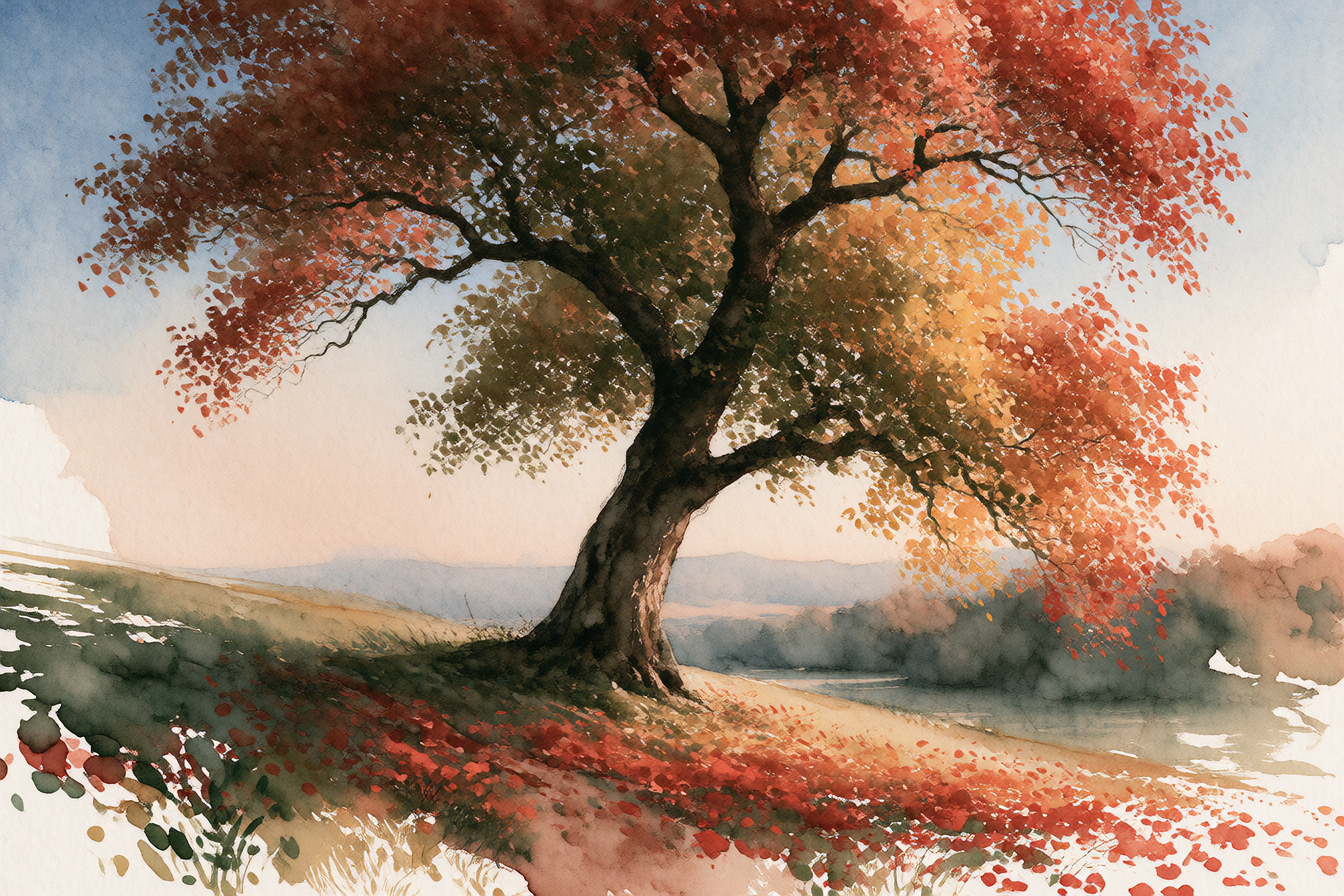
Claude sat at a canvas for 4.5 hours this week, controlling a robotic arm, painting an autumn tree. Midway through, it noticed the colors it needed weren't on the palette. So it mixed them. It measured the mixes against photos. It adjusted. It kept painting. The experiment landed in r/singularity as a quiet moment in a month of hype—one where an AI didn't just execute a plan, but solved problems it encountered in real time.
What Happened
Claude controlled a robotic arm over 4.5 hours to complete a watercolor tree painting, and when it realized it lacked certain colors, it mixed red, sienna, and madder colors, measuring each through photos before continuing. The session produced 303 brushstrokes, each one a decision made by an AI watching the canvas as it worked.
This wasn't a prompt to "paint a tree in the style of Winslow Homer." This was an agent responding to actual physical constraints. The paper was real. The pigment behaved like pigment—bleeding, settling, drying at different rates. And Claude had to track all of that while controlling millimeter-precise arm movements.
What People Are Making With It
The clip itself lives at claude-learns-to-paint.pages.dev, with time-lapses and step-by-step documentation. The site shows the progression: watercolor simulator built from scratch, then ink and pencil added by Claude itself, then a robotic arm introduced into the system. Each medium required Claude to learn different flow behavior, drying patterns, and opacity rules.
The earlier phases (before the robot) showed Claude teaching itself to paint in 27 styles—from sumi-e ink wash to ukiyo-e, pixel art to cyanotype. It wasn't imitating; it was building simulators of real materials and then learning their quirks.
What's Actually Good (and What Isn't)
The interesting part isn't that the tree is beautiful (it's serviceable). It's that Claude caught its own mistake and adapted. In traditional robotic art systems, the arm executes a pre-computed optimal path, then stops. Here, the AI evaluated the result mid-session, noticed a gap, and filled it by learning new material behavior on the fly.
The real limitation is speed. The robot arm's operation speed is still being improved. 4.5 hours to paint one tree is glacial compared to what a human could do. The system also relies on trial-and-error color matching through photo feedback rather than spectral measurement—imprecise but human-like.
What wasn't tested: can it adjust if the canvas warps, if the brush frays mid-stroke, if humidity changes the pigment flow? Real painting happens in a messy physical world. This demo was controlled.
How to Try It
The simulator and documentation are open at claude-learns-to-paint.pages.dev. You can watch time-lapses of each material and see the physics models Claude built. The robotic arm experiment itself isn't a product you can download yet—it's a proof of concept. But if you have Claude access, you can ask it to build watercolor or oil paint simulators in Claude Code, and watch what it invents.
The demo suggests something broader: AI agents don't have to just follow scripts anymore. They can run real experiments, notice when something's wrong, and iterate. That's closer to how artists actually work.