Claude Sonnet 5.5: 30% Faster, Same Price, Builds Full Games in Hours
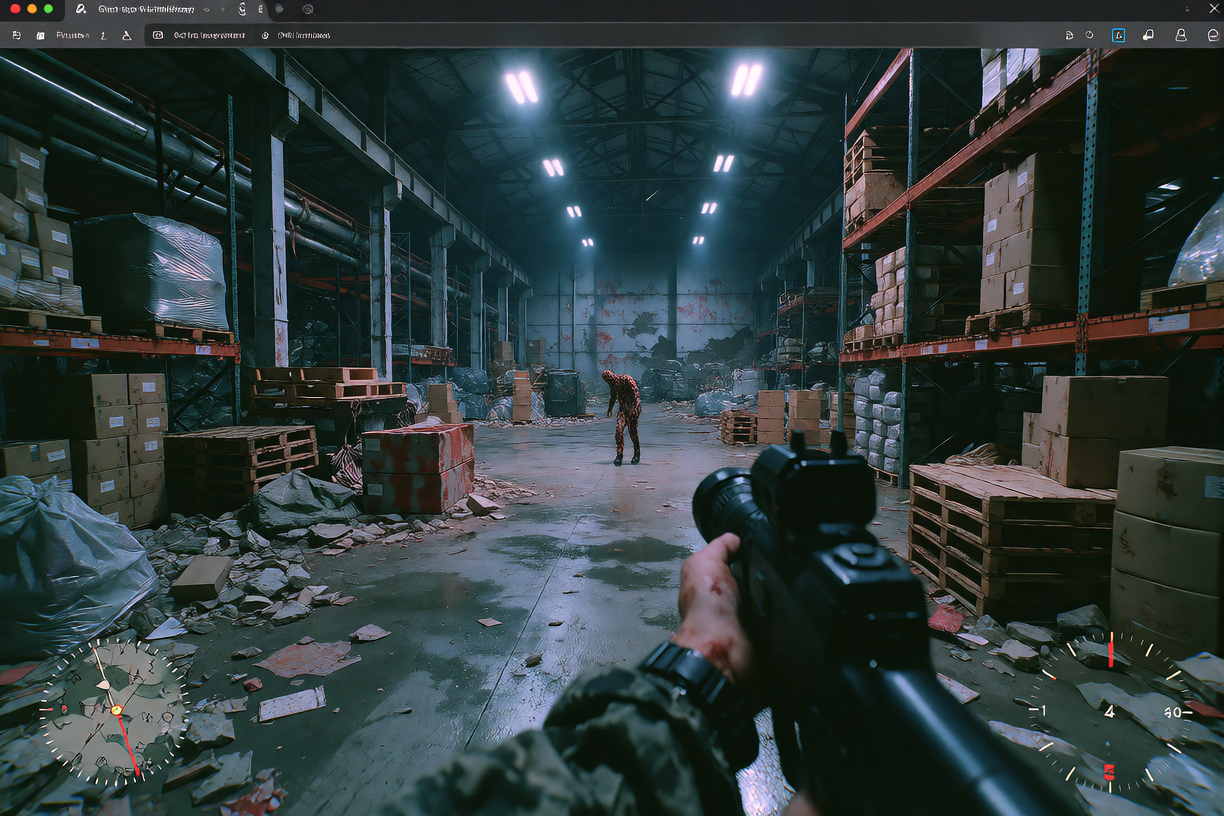
Anthropic released Claude Sonnet 5.5 yesterday, and if you're a builder, this is the model everyone's talking about. It's 30% faster than Sonnet 5, costs up to 30% less per task, and keeps the exact same API price: $2 per million input tokens, $10 per million output. But the real news isn't the speed or the efficiency—it's that people are already using it to build finished things, fast.
What Happened
Anthropic released Claude Sonnet 5.5, a faster and more efficient update to its mid-tier, workhorse AI model. It's the first Sonnet model to beat Pokémon Red working only from screenshots. On agentic coding tasks, Sonnet 5.5 scores 70.6% on Terminal-Bench 4.0, compared to Sonnet 5's 10.3%. That's a 60-point jump. Sonnet 5.5 reaches 1844 Elo on GDPval-AA v2.1, performing virtually on par with Opus 5.5 (1846 Elo), the flagship that costs twice as much per token.
Claude Code defaults the model to Medium effort, while the Claude Platform defaults to High. Lower settings trade some reasoning depth for lower latency and token consumption; higher settings allow the model to spend longer checking and refining its work. The clever part: At medium effort (the default setting in the Claude apps and Claude Code), Sonnet 5.5 exceeds Sonnet 5's best score for less than a tenth of the cost per task.
What People Are Making With It
The game demo is getting the most attention. Someone used Sonnet 5.5 in Claude Code to build Dead Signal: Exclusion Zone, a single-player, first-person zombie extraction shooter that runs in your browser. Built by Claude Sonnet 5.5 and its sub-agents in Claude Code from a single prompt, using Three.js, TypeScript and Vite. Every model, texture and sound is generated in code: no downloaded assets, no backend, no accounts. The post on r/singularity notes it took one day and cost $177 in API calls.
On the Claude team's own customer testing, Sonnet 5.5 produced apps that scored level with Opus 5. It got there in 3.6 iterations per build on average, where Opus 5 took 7.7. One test had Sonnet 5.5 complete a CSS debugging task in around 10 seconds. It correctly mapped visual issues to specific rules, suggested minimal fixes, added verification steps, and clearly called out areas where it was uncertain.
Creators are also testing it on motion graphics and animation—Reddit's r/ClaudeAI had a post reach #50 overall for a motion design showreel made with Sonnet 5.5 that apparently rivals what Opus 5.5 can do.
What's Actually Good (and What Isn't)
The speed matters more than the benchmarks suggest. If you ask Claude to help you summarize something, explain a complicated topic, help plan a project or work through a problem, and then follow up as the answer takes shape, a faster model earns its keep, because a few extra seconds of waiting on every response can quickly add up when you're having a longer conversation.
On coding, the gains are extreme but context-dependent. At medium effort, Sonnet 5.5 exceeds Sonnet 5's best score for less than a tenth of the cost per task. Sonnet 5.5 avoids unnecessary subagent spawning and executes terminal commands directly, keeping task loops tight. But effort levels matter: The split defaults catch teams out. A prototype built in Claude Code runs at Medium, and the same prompt sent through the API runs at High unless you set it yourself. Latency and cost per task will differ between the two, and the model hasn't changed.
Opus 5.5 is still the right pick for the hard stuff. Where Opus 5.5 is built for complex work requiring careful judgment, Sonnet 5.5 is strongest at well-scoped everyday tasks, fixing bugs, and creating polished documents, slides, and spreadsheets. The real shift is that "well-scoped" now includes building playable games and completing 118 real app builds at Opus 5 quality.
How to Try It
It's available on the Claude API, Claude in Amazon Bedrock, Claude Platform on AWS, Claude on Google Cloud, and Claude in Microsoft Foundry. Sonnet 5.5 is now the default model for all users of Claude App. If you use Claude without a subscription, this is the model you are talking to.
If you're already using Sonnet 5 on the API, swap the model ID to claude-sonnet-5-5. No price change, and most workloads will use fewer tokens. If you're trying game-building or motion graphics, start in Claude Code on Medium effort and watch the cost-per-iteration drop. The effort levels are the tuning dial—don't assume Max if you want to ship fast.