DeepSeek's Open-Source Super-Agent: Always-On, Rule-Based, MIT License
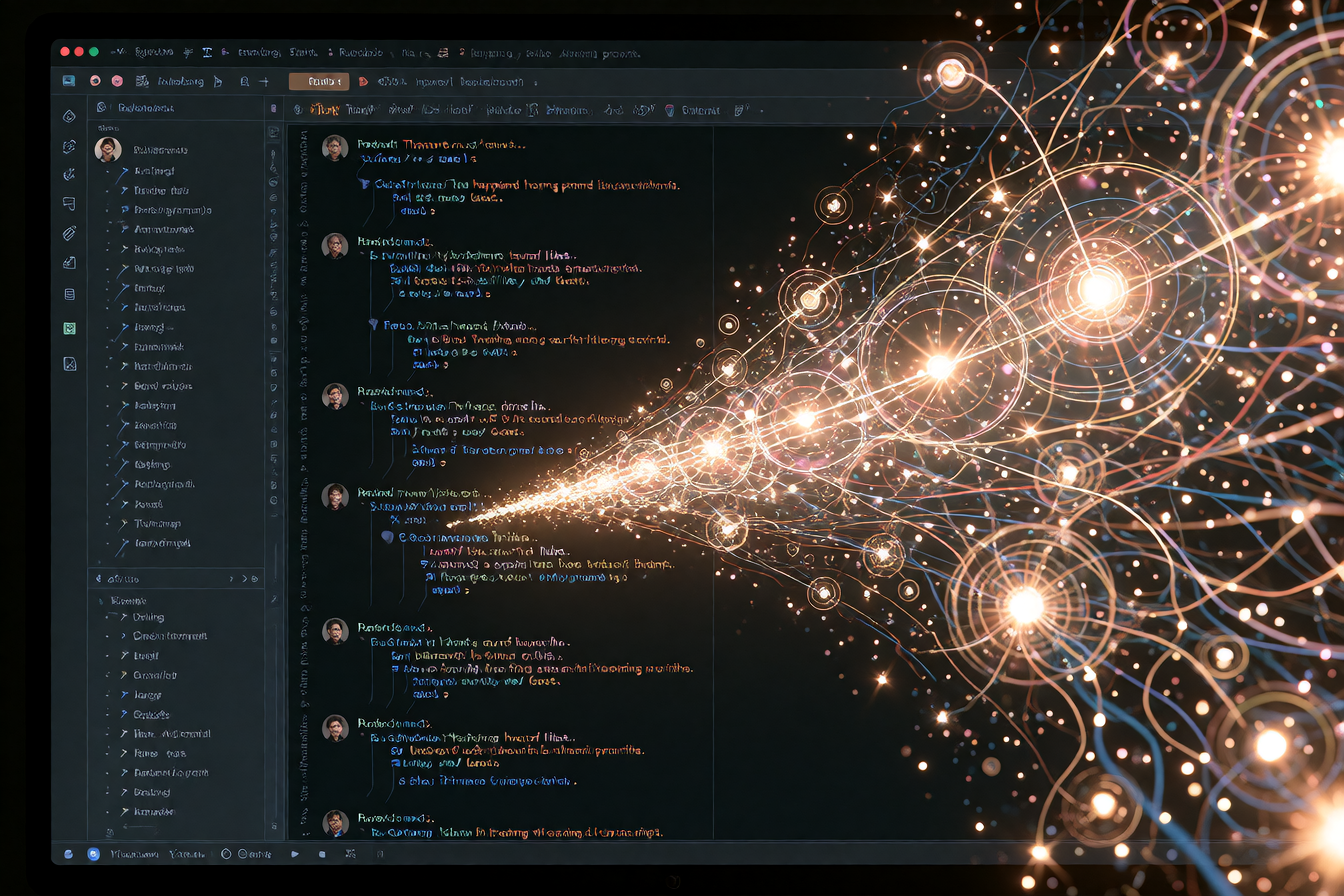
DeepSeek released a prototype of what it calls Super-agent on October 31, arriving today as a fully open-source project under the MIT license. Instead of waiting for you to ask for help, it watches your team's chat, spots coding problems, and proactively suggests solutions.
What Just Shipped
DeepSeek released a prototype of a more autonomous coding agent as it seeks to challenge Anthropic's Claude Code. The new open-source offering, dubbed "Super-Agent," can proactively monitor group chats among developers for feedback on coding issues and suggest solutions without being summoned, according to the DeepSeek Harness team's announcement.
The DeepSeek Harness team has published dsh-superagent on GitHub, the open source prototype (MIT license) of an agent that works on a single repository, listens to GitHub and acts only when an authorized person asks it to or when a rule written by the team allows it.
The Super-agent prototype lives inside DeepSeek's broader Harness runtime. DeepSeek Harness is an open-source, MIT-licensed agent runtime built on the Cordis meta-framework where everything is a plugin. An MIT-licensed, Cordis-powered agent harness that turns DeepSeek's models into autonomous coding agents — models, tools, sandboxes, and even the UI are all swappable plugins.
Why Creators Are Paying Attention
The release strategy matters. The release separates DeepSeek's open-source agent tooling from its model API business. Harness and the Super-agent prototype are available under the permissive MIT license, allowing developers to inspect, modify, and self-host the code while choosing how to supply the underlying model. That's the opposite of a proprietary cloud service—you can audit it, fork it, run it locally, or plug in your own models.
DeepSeek Harness is DeepSeek's open-source agent framework, released on August 13, 2026 under the MIT license. Its design slogan is "Everything is a Plugin," and that is meant literally: models, tools, skills, sessions, sandboxes, storage, agent loops, scheduling, and even the UI are all plugins running on Cordis.
For creators building workflows, that means you can swap out models, add new capabilities as plugins, and share your work without vendor lock-in. The Harness also runs locally or as a web UI, so your process stays on your machine by default.
What It Actually Does (and Doesn't)
The agent monitors group chats among developers to identify coding issues and proposes solutions without being called. DeepSeek said the goal is to reduce what people must handle while maximising value gained.
But the published code does not match the internal version, nor the one described in the paper "Exploring Super-agent Design: Towards a More Autonomous Agent System", and some ideas in that text remain future directions that are not implemented. DeepSeek's Super-agent is the only one of the four whose rulebook can be read and rebuilt, but also the only one the company expressly declares not ready for production.
It's a research prototype. Harness remains experimental preview software. DeepSeek explicitly labels both Harness and the Super-agent code experimental and warns users to review and adapt them. There will be breaking changes, and you should read the code before using it in a real workflow.
How to Try It
Install Node.js, then run: npx @deepseek-ai/dsh web. The command starts the Web UI at http://127.0.0.1:3080 by default and opens it in the default browser for a local launch. Pass --no-open to run the server without opening a browser.
If you want to build plugins or track the main development branch, run from repository checkout: git clone https://github.com/deepseek-ai/deepseek-harness.git.
DeepSeek Harness is now in public preview worldwide and open source, with composable plugins that extend what agents can do. You'll need a DeepSeek API key to run inference, but the entire orchestration layer is yours to inspect and modify.