Fish Audio Drama 3: Direct AI Voices Like a Script, Run Locally
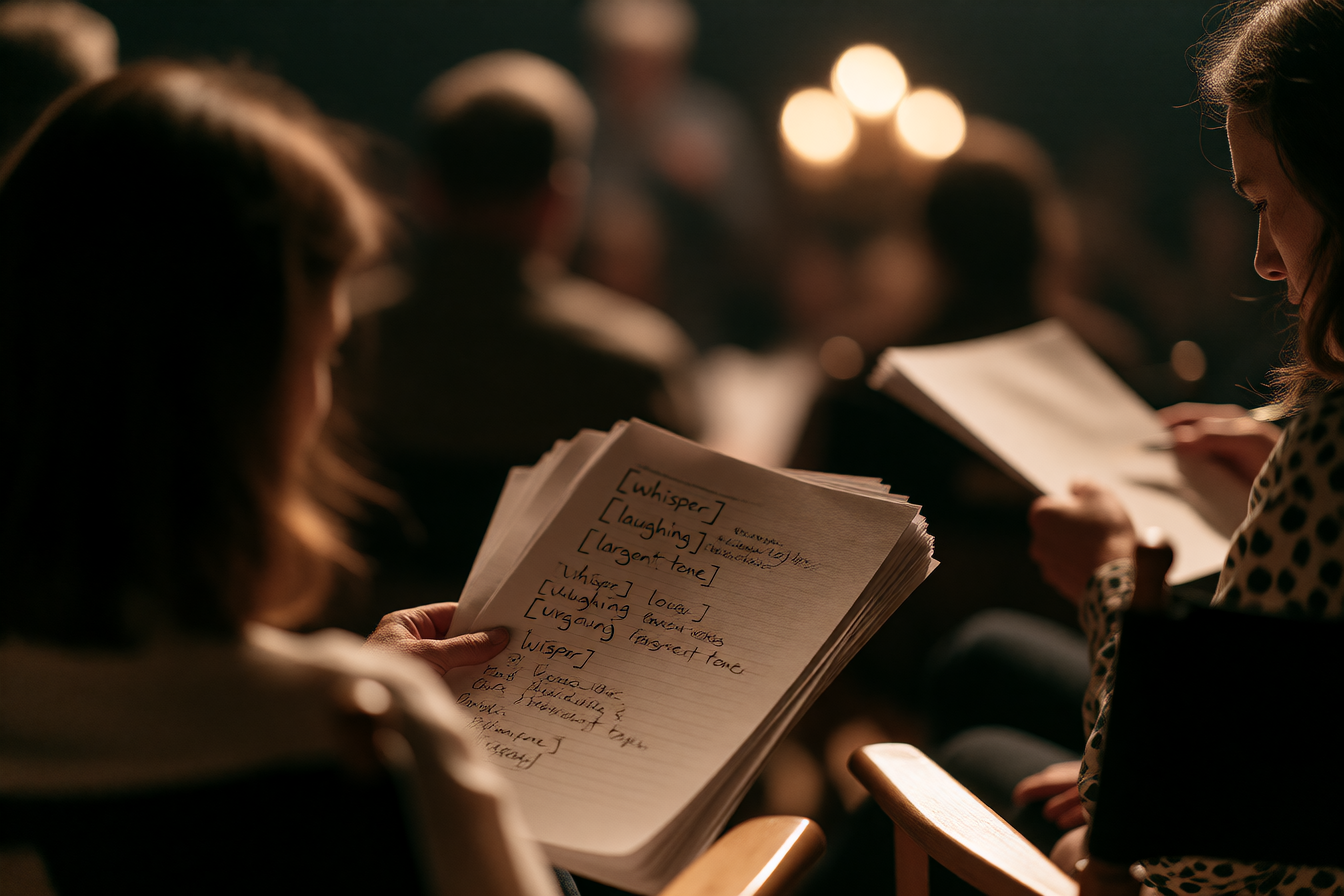
Fish Audio just shipped Drama 3, and it's the first time a text-to-speech model has felt like it speaks the language of screenwriters. Announced on October 13, 2026, it's a 35B-parameter mixture-of-experts text-to-speech model with about 3B active parameters per token, built on the Qwen3.5-35B-A3B backbone. The novelty isn't just that it's open-weight—it's how you talk to it.
What's Different
It takes performance direction written in plain language: [choked up, crying quietly] in front of a line changes how that line is read. Imagine writing a script, dropping stage directions where they belong, and getting back a finished scene with natural emotional beats. It supports 83 languages, and can render up to 16 speakers in a single API request—so a whole dialogue-heavy sequence renders at once, with voice shifts and emotional peaks baked in.
Audio inpainting lets you regenerate a single word while keeping surrounding voice, mood, and rhythm intact. That's not trivial: it means you can fix a stumbled word or change a delivery without re-rendering everything.
What People Are Making With It
The immediate use cases are obvious: game dialogue, audiobooks, localized dubbing, voiceover work. For developers, it is a self-hostable option for scripted dialogue, audiobooks and dubbing. Creators have already been testing it—it came out as a downloadable checkpoint, a ComfyUI node, and a day-zero serving recipe, all within the same afternoon.
The multi-character single-pass rendering is the killer feature. Writers and game devs won't need to chain requests or stitch clips; they can write one scene file and get back a finished audio scene.
What's Actually Good (and What Isn't)
The model scores 93.2% on Artificial Analysis Pronunciation Robustness (best-in-class for Fish Audio) but trails ElevenLabs' Eleven v4 Turbo on overall quality Elo. So: best pronunciation ever from Fish Audio, solid voice naturalness, but not at the absolute top tier yet.
The catch: self-hosting requires at least 48GB of NVIDIA GPU memory in FP8 (no CPU, Apple MPS, or AMD ROCm support). If you want to run this yourself, you need a high-end NVIDIA card. That's a real constraint for solo creators.
Commercial use is free for companies under $500,000 in annual revenue; hosting Drama 3 as a third-party API requires a separate license. So small teams can use it freely, but if you build a SaaS around it, you'll need to arrange licensing.
How to Try It
The weights live in the fishaudio/drama-3 repository on Hugging Face, with an int4 quantisation alongside and the serving code on GitHub. The weights are open on Hugging Face.
If you don't have the GPU overhead, the Drama 3 API lists at $50 per 1 million characters, with a discounted launch price of $10 per 1 million characters through November 12, 2026.
For running it locally, you'll need SGLang-Omni (their optimized serving stack for this model) and patience for the setup—but creators who have 48GB+ NVIDIA cards and want full control now have it.