Gemini 4 Carbon Hears What Other AI Models Miss in Audio
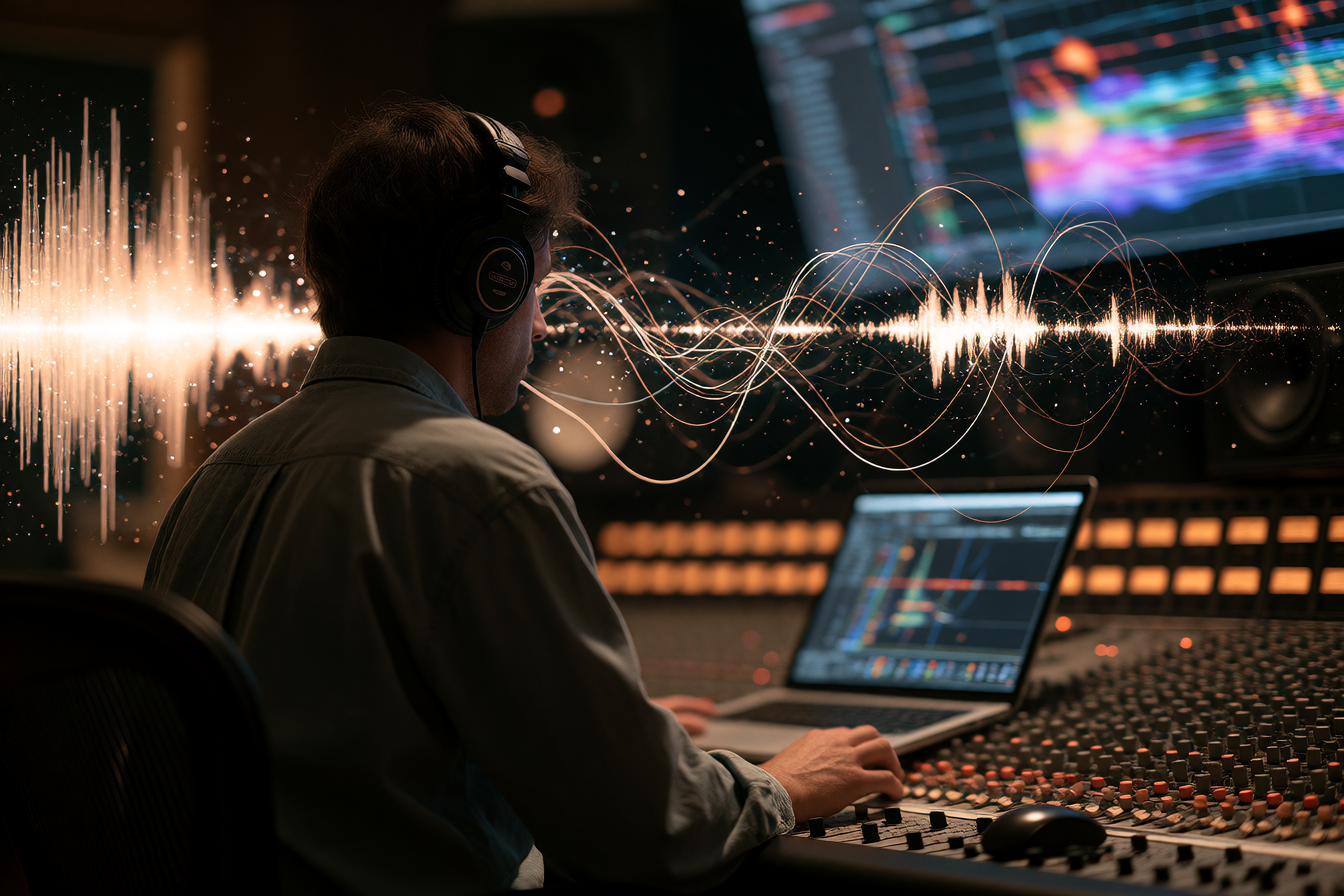
Google released Gemini 4 Carbon this week as its frontier reasoning model, and the feature that's catching creator attention isn't the coding performance or the agent loops—it's that this model can actually hear.
Unlike earlier models that slice video into frames and miss temporal relationships, Carbon perceives audio and video natively. For audio engineers and producers, that changes what's possible.
What people are making with it
Ambient producer Kieran Klaassen built a music workstation inside Carbon: he renders 30 seconds of audio and asks the model to mix it, and it handles chords, EQ and transcription without being fed parameters. It doesn't need him to describe what went wrong. It listens.
On a timeline with clipped dialogue—a speaker's line cut off at the joint—Carbon spotted the glitch immediately where Claude, Astra, and Opus all missed it on repeated plays. It diagnosed the cause and opened a pull request to fix it. The difference was native audio perception versus the frame-slicing approach competitors use.
Google's demo shows Carbon building a playable 3D game with procedural Web Audio sound effects paired with Lyria music, coordinating specialized models across modalities. The synthesis—reasoning + Lyria music generation + spatial audio design—happens in one agent loop.
What's actually good (and what isn't)
The strength: Carbon's native audio and video processing is the clearest edge over existing models. If you're working with complex media timelines, this removes a layer of friction. The orchestration capability—calling out to Lyria for music, Nano Banana 2.1 for imagery, generating sound effects all in one task—collapses what used to be separate workflows.
The catch: Carbon is a reasoning model, not a music generator or audio editor. It can't create a full song on its own; it coordinates Lyria and other specialists. The prose output has also regressed from Gemini 4 Argon—it's dense and information-stuffed rather than conversational.
Its $2/$10 per million tokens pricing (input/output) makes it competitive, but multimodal tasks run expensive fast. The 1M token context helps, but a single audio file eats tokens quickly.
How to try it
Carbon is live now through Google AI Studio, the Gemini app, and the Gemini API. If you're building an audio-heavy agent or want to explore orchestrating Lyria music with reasoning, start in AI Studio where you can iterate on prompts without writing integration code first.
For music-only work, stick with Lyria 3.5 directly in Google Flow Music. For audio debugging, mixing consultation, or multi-modal production pipelines, Carbon's native perception is worth testing. The $2 input rate makes fast iteration affordable.