Genie 4: Worlds That Speak, Script in Realtime
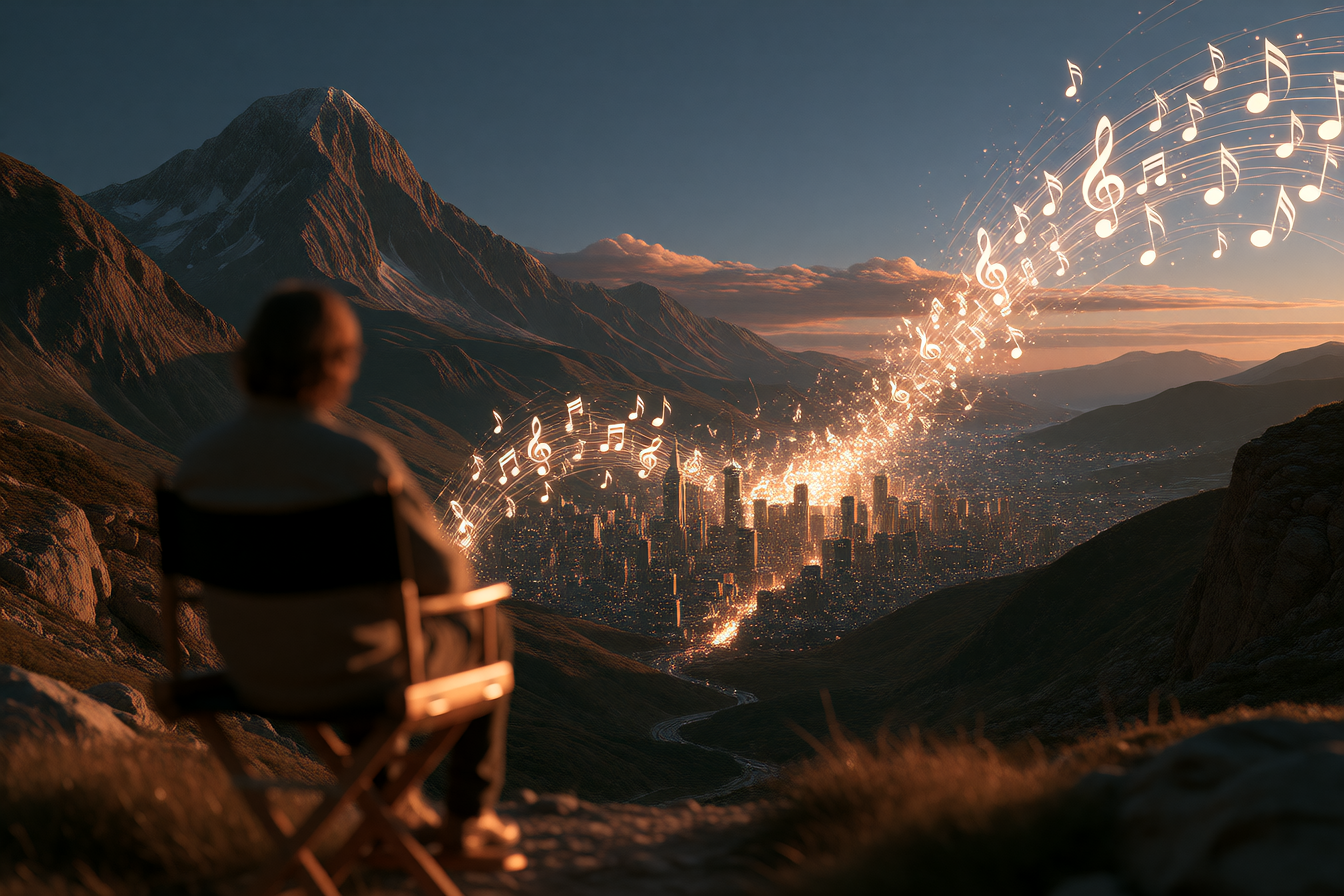
Google DeepMind released Genie 4 yesterday as a research preview, and the first real-time world model to generate audio natively is already reshaping how filmmakers and video creators think about pre-production.
Before this, world models were silent. You could explore interactive 3D environments and even steer them mid-simulation with text prompts, but the worlds didn't sound like anything. Genie 4 changes that: it generates ambient sound, music, and character dialogue as the world unfolds, all synchronized to what you're watching.
What People Are Actually Making
Filmmakers testing Genie 4 are using it as a fast draft mode for pre-visualization. They step into a live scene and run several takes, changing lighting, dialogue, and camera angles. One concrete workflow: a creator can take a still image generated in another tool (like a sci-fi location made in Midjourney), load it into Genie 4, explore the space to find camera angles, and use those as reference for shooting actual footage elsewhere—the most immediately practical use case for people making AI-assisted video content today.
Creators are experimenting with genre shifts mid-scene, like introducing a kaiju into the background of a quiet dramatic scene to change tone without starting over. Other uses include game prototypes, learning applications like stepping into a historical painting and talking to its subjects, and filmmaking where directors want to play through scenes and storyboards faster.
The audio isn't a voiceover added after. Genie 4 generates audio natively—each world comes with its own ambient sounds from wind in the woods to ocean waves, and background music, with sounds generated in sync with visuals, not added afterward.
What's Actually Good—and What Isn't
Genie 4 can maintain a consistent scene for up to two minutes, double Genie 3's limit, and offers better physics and more humanlike characters. The real-time steering feels responsive; you can type a prompt mid-simulation and watch the world adapt without regenerating.
But there are real walls. Visual details and object permanence can drift in longer sessions or after complex prompt edits; real-time audio accuracy is still unresolved; legible text inside generated worlds is not yet reliable; and spatial accuracy and long-term consistency remain active research areas. Google acknowledged the tool is not a replacement for established game or film production pipelines.
One engineer was honest about the limitations: Diego Rivas, a Google DeepMind engineer, said real-time generation pays off most in ideation and storyboarding. It's a thinking tool, not a delivery engine.
How to Try It
Genie 4 started rolling out to a research preview for trusted testers, and is coming soon to Google AI Ultra subscribers in Project Genie and early access partners of the Gemini API and AI Studio. If you're on the waitlist, the beta is live now.