Museum of Unworkable Devices: A Gallery of Impossible Machines
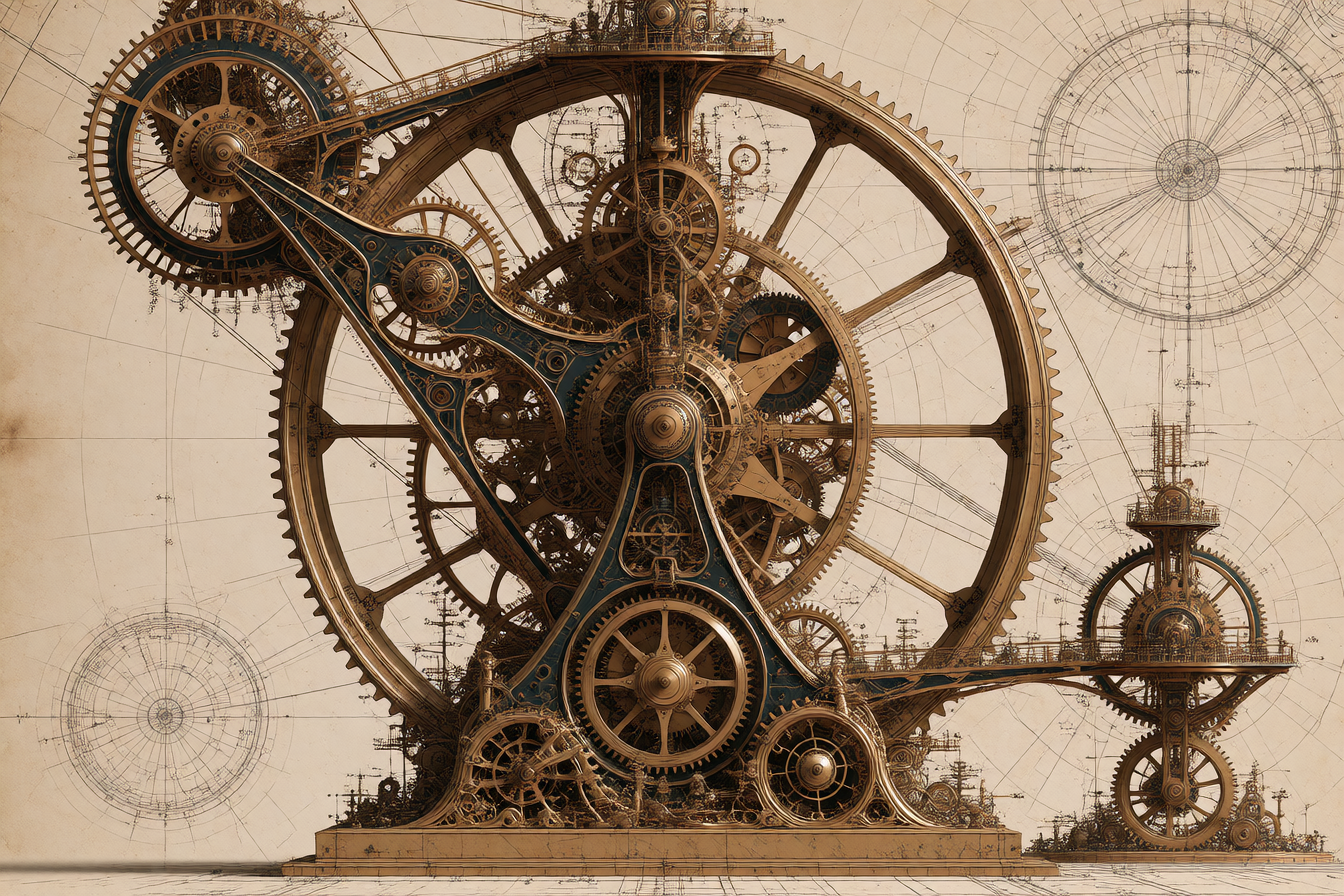
The Museum of Unworkable Devices is a celebration of devices that never worked and never will. Created by Donald E. Simanek, an emeritus physics professor at Lock Haven University of Pennsylvania, it houses hundreds of beautifully rendered diagrams and drawings of perpetual motion machines—contraptions whose inventors believed would run forever without energy input, defying the laws of thermodynamics.
What's there
Built beginning in 2002, the museum contains detailed technical drawings of impossible devices from centuries of engineering dreamers: medieval overbalanced wheels, magnetic engines, buoyancy motors, and elaborate pulley systems. Each machine is rendered in careful mechanical perspective—gears, pulleys, weights arranged with apparent logic—yet each one fundamentally cannot work. The site presents the machines straight, without mockery, then walks through exactly why physics refuses to cooperate.
Where to start
The Physics Gallery: An educational tour that explains what makes each machine fail. See how 12th-century wheel designs were meant to stay in perpetual motion, then discover where the inventor's reasoning stumbled.
The Advanced Concepts Gallery: Inventors who went beyond simple overbalanced wheels, trying magnetic shields, capillary action, and gravitational tricks—schemes that demanded more creative thinking but were still impossible.
The John Worrell Keely Memorial Gallery: A dedicated section on one of the great perpetual motion con artists of the 19th century, who claimed he could extract energy from the "luminiferous ether."
Make something from it
These diagrams offer a visual language of technical precision applied to impossibility. The careful draftsmanship, the period engraving style, the idea of rendering the physically impossible in meticulous mechanical detail—all of it is ripe for reinterpretation. An artist could use this aesthetic to explore failure, optimism, the gap between intention and physics, or simply make steampunk designs that embrace their own futility. The machines are beautiful precisely because they cannot exist.
Sources
- Museum of Unworkable Devices entry on ComPADRE, a physics education resource network