Retro-Futurism Archive: Graphic Tees as Artifacts from Futures That Never Arrived
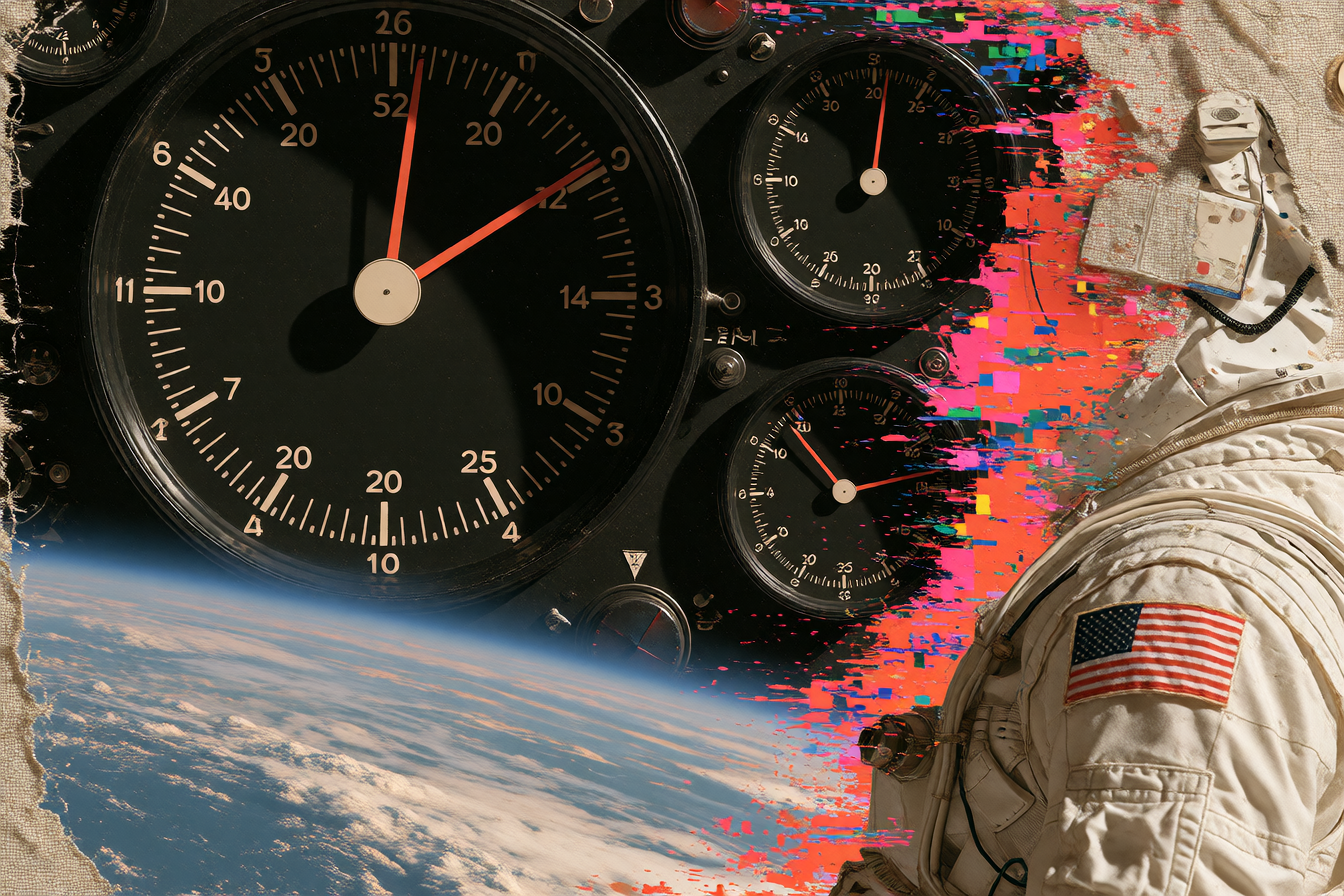
The Retro-Futurism Archive is a digital collection of graphic t-shirts organized as historical artifacts from an imagined timeline. Each design is catalogued by design signal—systems, memories, motion, and glitches—treating everyday wearables as evidence of how people in earlier eras imagined tomorrow would look, feel, and function.
What's there
The archive is curated and operated by the Retro-Futurism Archive team. Rather than a commercial t-shirt store disguised as an archive, this functions as a visual library where each design documents a specific aesthetic signal. The collection includes designs encoding chrome, synthesizers, analog interfaces, space imagery, corrupted digital artifacts, and the visual language of technologies that promised to transform daily life but arrived differently—or not at all.
Where to start
- Search the archive by signal type. The filter system breaks designs into Systems (interfaces, machines, infrastructure), Memories (nostalgia encoded in graphics), Motion (speed, flow, kinetic energy), and Glitches (corruption, error states, digital breakdowns). Each category reveals how a visual metaphor persists across decades and design languages.
- Explore a Signal ID. Each featured design has an identifying number and narrative context—not just product information. The curatorial writing explains what aesthetic moment the design captures and why that particular vision of the future matters now.
- Read the essays. Pages like "What Is Retro Futurism?" and "Retro-Futurism vs. Synthwave vs. Cyberpunk" untangle the visual grammar of these futures: what chrome promises, what neon means, why a rounded corner once felt futuristic, how a glitch exposes the system beneath.
Make something from it
The archive becomes a visual reference for artists and designers interested in retrofuturism as more than nostalgia—as a way to decode how hope and technology get encoded into form. The color palettes alone (phosphor green, amber indicator light, saturated synthwave hues) offer a direct palette to pull from. More conceptually, the archive models how to treat everyday objects—a t-shirt, a logo, a corrupted signal—as documents of collective imagination. An artist could trace how a single visual motif (say, the rounded spaceship) evolves across design eras, or use the signal categories as a constraint: create a system, memory, motion, and glitch version of the same idea.