Your Name, Their AI: The Scams That Are Breaking Author Trust
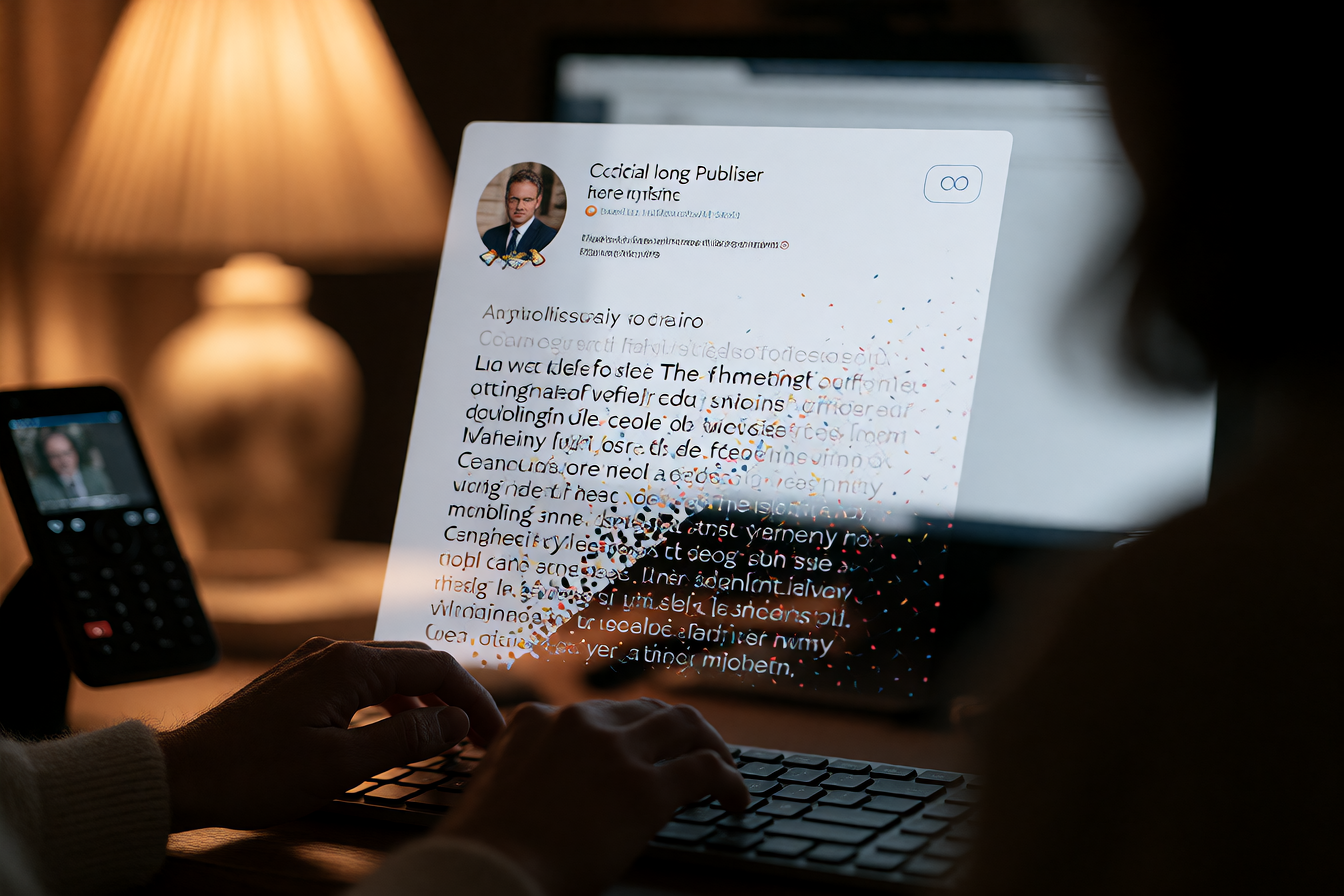
An author gets an email from what looks like a major book club. The writing is eerily specific—they mention your book by title, quote a passage, praise a character by name. It feels real. Then they ask for a modest fee to feature your work. By the time you realize it's fake, the scammers are gone. Your money is gone. Your trust is shaken.
This is happening to hundreds of writers right now, and it's getting harder to spot. AI can "help to tailor emails, produce fake pictures and documents, and create websites" to lure in writers, meaning a scammer in Lagos can spend five minutes generating what used to take an hour of research to fake. Just a few years ago, someone would have needed to spend probably an hour or more to find out an author's book title and description, locate their email address, and write up an email of a few short paragraphs making it look like it was written by a person with a sincere interest in the author. These days the same thing can be generated in seconds.
But the scams are only half the problem. The other half is worse: readers don't know what's real anymore.
When Trust Collapses
Both controversies reflect a growing rupture of trust between readers, writers, and publishers, as AI use – alleged or proven – continues to rock the literary world. In July, a debut novel called Daggermouth hit the USA Today bestseller list and landed a seven-figure deal with Simon & Schuster's imprint. Then an Atlantic investigation alleged it may have been AI-assisted. The publishers didn't pull the deal—they couldn't confirm either way. That uncertainty destroyed it.
Similarly, when the Caine Prize (one of Africa's most prestigious literary honors) went to a Zimbabwean writer, academics and journalists almost immediately alleged AI involvement. Kundizeza is one of several Black and African writers caught up recently in a whirl of accusations that has thrown literary reputations into question, scuttled multimillion-dollar book deals, challenged the integrity of African literary institutions and called attention to the danger that the AI panic poses to Black and African literature.
The problem: these so-called AI shibboleths are equally present in human writings — human writings with which AI was trained — and so do not definitively prove AI use. There is no reliable way to tell. So writers live in a state of paranoia, readers in a state of suspicion, and scammers in a state of abundance.
What Creators Are Losing
When authors hide their AI use, the trust between readers and writers can erode, but when they disclose it, readers penalize them anyway. In a 2025 survey, 61% of readers would feel less fulfilled reading an AI-written book. No middle ground exists. Some readers say, "I'm not gonna read anything published after 2022, because then I can be sure that it doesn't have generative AI in it."
For writers, this is catastrophic. The ubiquity of scams makes it almost impossible to trust any unsolicited emails. Legitimate agents, publishers, and podcasters can't reach authors anymore because authors assume all contact is a con. The scammers have broken the basic infrastructure of how writers connect with opportunity.
For all creators—musicians, visual artists, filmmakers—the threat is the same: your work could be republished under someone else's name, your identity could be cloned for a scam, and no one will believe you when you say it's yours.
The System Is Broken
Electric Lit recently published an "Author AI Scams Bingo Game" that every writer can play and laugh at. The fact that this joke exists shows how normalized the scams have become. There's no solution coming from Amazon, no comprehensive detection system, no verification standard that creators can rely on.
What began as a whisper of efficiency has become a clamour of concern, eroding the bedrock of trust between author, publisher, and reader. The literary world has become a place where everyone suspects everyone else, where authenticity is impossible to prove, and where the only winners are the scammers.
For creators on Mirrorize and beyond, the message is clear: trust is the hardest asset to rebuild once it's broken. And right now, it's being broken every day.