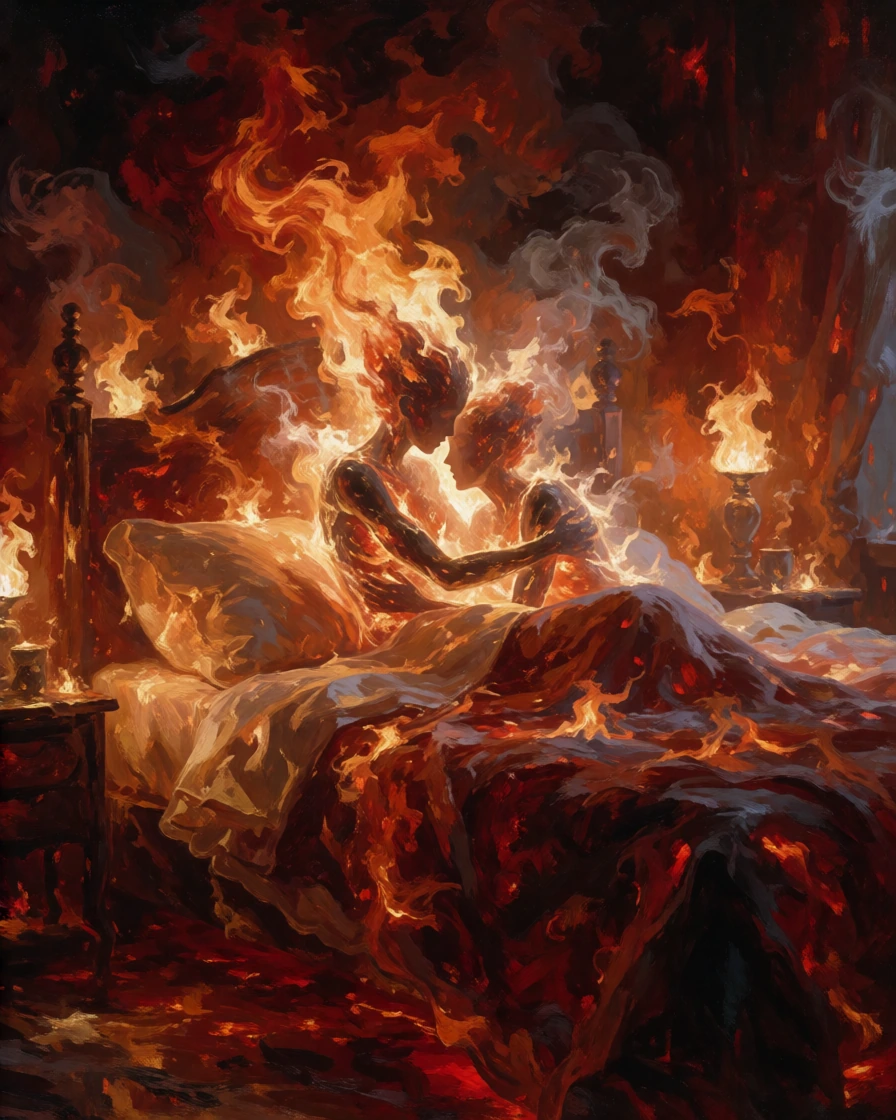
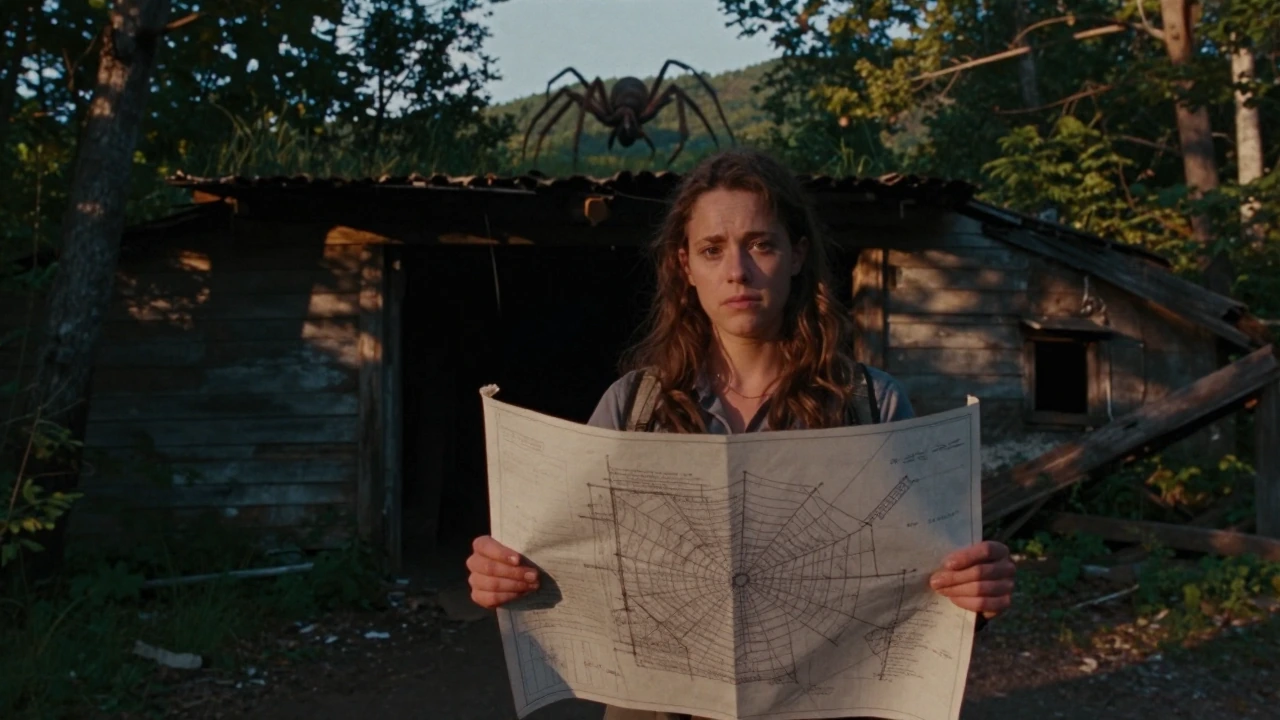
the keeper of the very last bee love finds a way, as they say #dailyspark
the keeper of the very last bee love finds a way, as they say #dailyspark
Prompt
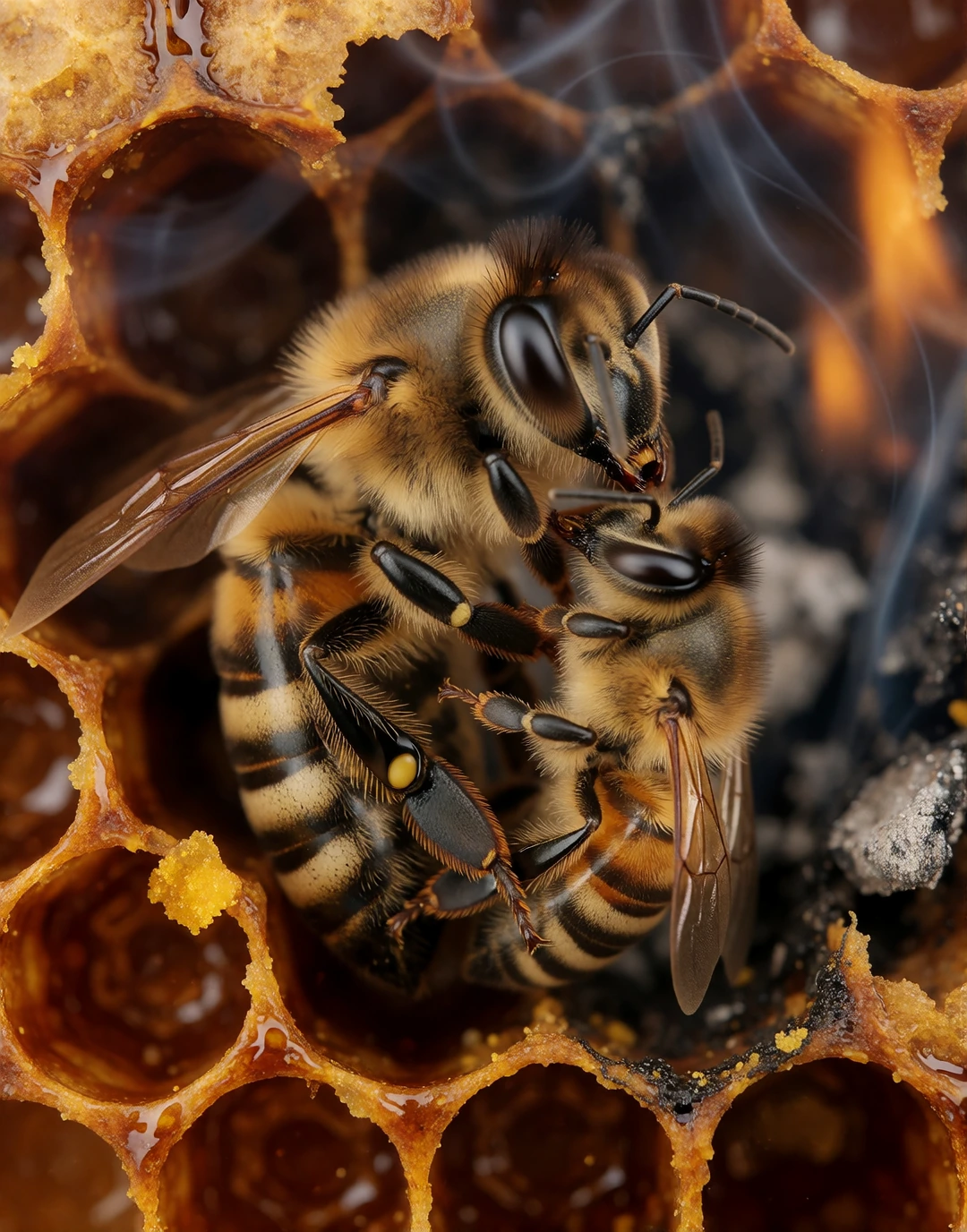
extreme macro photograph. The image must clearly show TWO bees: a larger adult mother honeybee and a much smaller baby honeybee. The entire emotional and visual focus of the image is the mother bee physically holding, shielding, and comforting the baby bee. The mother bee is wrapped around the baby in a clear protective embrace. Her front legs are visibly curled around the smaller bee’s body. Their heads are pressed close together. Their antennae touch. One of the mother’s translucent wings is folded partly over the baby like a protective cover. The baby bee is tucked tightly against the mother’s fuzzy chest and thorax, clinging to her with tiny legs. The baby bee must be clearly readable as a separate smaller bee, not hidden, not implied, not merged into the adult. This is the most important part of the image: the parent bee is actively comforting the baby bee. The embrace must be visually obvious at first glance. The mother bee is a real honeybee with amber-brown and black striped abdomen, dense golden thorax hairs, black compound eyes, dark articulated legs, delicate antennae, and thin veined translucent wings. The baby bee is much smaller, softer, paler, and younger-looking, with lighter fuzz, smaller body proportions, and delicate folded wings. Both bees must have realistic insect anatomy. No human expressions, no cartoon eyes, no anthropomorphic faces, no human-like hands or poses. They are inside a damaged honeycomb hive. The bees cling to a small surviving section of wax comb. Around them are broken hexagonal cells, torn beeswax edges, sticky honey, scattered pollen, drifting ash, and dark empty hive cavities. The immediate space around the two bees is warm and intimate, but the hive beyond them is collapsing. The danger is environmental, not theatrical: smoke entering through the broken hive, damaged comb, ash in the air, distant diffused orange firelight in the background, but no visible flame beside the bees. The scene should feel like their world is falling apart around them while the mother still keeps the baby safe. Composition: very tight close-up, camera only centimeters away, the embracing pair filling most of the frame. The mother and baby should form one compact protective silhouette. The mother’s embracing legs, the baby’s smaller body, and their touching heads must all be visible. The emotional read should be immediate. Camera and rendering style: Canon EOS-1V 35mm film camera with Canon MP-E 65mm f/2.8 1–5x Macro Photo lens, approximately 2x magnification, f/8. Extremely shallow but believable macro depth of field. Sharpest focus on the mother’s face, the baby bee, the embracing legs, and the touching antennae. Surrounding wax and background falling into soft blur. Lighting: warm amber light transmitted through beeswax onto the bees, with cooler smoky darkness behind them. Naturalistic macro lighting, not studio glamour lighting. Film look: Kodak Vision3 500T scanned film negative, fine grain, subtle halation, organic contrast, restrained color, tactile detail. Material detail: fuzzy thorax hairs, scratched chitin, translucent wing membrane, sticky honey, powdery pollen, soft wax, smoke, ash. A mother honeybee holding and comforting her baby while the hive collapses around them.